







Home Battery Storage UK 2026: Future Energy Solutions: Costs, Grants, Savings & Is It Worth It?
Last updated: May 2026
Home battery storage has crossed a genuine financial tipping point in 2026. With electricity prices remaining volatile, 0% VAT on battery systems still in force until March 2027, and the government’s Warm Homes Plan channelling billions into household energy upgrades, more UK homeowners than ever are seriously weighing up whether a home battery is worth the upfront investment. The short answer: for most households with solar panels and a time-of-use tariff, it now is.
This guide covers everything you need to make an informed decision — real installed costs, how much you can actually save, which grants apply, how to size a system correctly, and which brands dominate the UK market in 2026.
What Is Home Battery Storage and How Does It Work?
A home battery storage system stores electricity — either surplus energy generated by your solar panels during the day, or cheap off-peak grid electricity bought at night — and releases it when grid power is expensive or unavailable. The result is that you import less electricity at peak prices, dramatically cutting your bills.
Three core components make up any home battery system:
-
The battery cells: Almost universally lithium iron phosphate (LFP) chemistry in 2026.
-
A battery management system (BMS): Monitors cell health and controls charging rates.
-
A hybrid inverter: Converts stored DC electricity into the AC power your home uses.
Without all three working together, the system cannot deliver maximum savings.
How Much Does Home Battery Storage Cost in the UK in 2026?
A fully installed home battery system in the UK costs between £2,500 and £8,000 in 2026, depending on capacity and brand. The good news: 0% VAT applies to all battery storage installations — whether paired with solar or standalone — saving homeowners £450–£1,600 compared to the previous standard 20% rate.
Here is a realistic price breakdown by system size for 2026:
| Capacity | Best For | Installed Cost (incl. 0% VAT) | Typical Annual Saving |
| 5 kWh | Flats / small homes | £2,500–£4,500 | £200–£350/yr |
| 10 kWh | 3–4 bed homes | £4,500–£7,000 | £350–£600/yr |
| 13 kWh+ | Large homes / EV owners | £7,000–£9,500 | £500–£900/yr |
Note: Always request quotes that include installation. Hardware-only prices from some advertisers can mislead by £500–£1,500. Battery prices fell approximately 15–20% between 2024 and 2025 and are expected to continue declining, though the removal of 0% VAT after March 2027 will partially offset future hardware savings.
Is Home Battery Storage Worth It in the UK in 2026?
For most UK households with solar panels and a time-of-use electricity tariff, home battery storage is worth it in 2026. The financial case depends on three variables: whether you have solar panels, which electricity tariff you are on, and how you use your energy day to day.
The most honest breakdown looks like this:
-
Best case — Solar panels + EV + time-of-use tariff (e.g., Octopus Go): Payback of 5–8 years, saving £600–£900 per year across home and EV charging combined.
-
Good case — Solar panels + time-of-use tariff, no EV: Payback of 7–10 years, saving £400–£600 per year.
-
Marginal case — Solar panels only, flat-rate tariff: Payback of 12–15 years; switching tariff first is free and dramatically improves economics.
-
Weak case — No solar, flat-rate tariff: Payback extends beyond 15 years; solar panels are a better first investment.
The key insight: The tariff matters as much as the battery. A 10 kWh battery charged overnight at Octopus Go’s 7.5p/kWh rate and discharged during peak hours at 27p/kWh saves around £340–£500 per year purely from price arbitrage — even without solar panels.
What Grants Are Available for Home Battery Storage in the UK in 2026?
There is currently no standalone grant exclusively for home battery storage. However, several UK government schemes make battery systems significantly more affordable in 2026, and new support is arriving throughout the year.
Warm Homes Local Grant
Low-income households in England can receive free battery storage as part of a wider energy efficiency package under the Warm Homes Local Grant. The grant covers up to £15,000 of energy improvements — including solar panels, insulation, and battery systems — for households with EPC ratings D–G and incomes below approximately £36,000, or those receiving certain benefits. Funds are paid directly to installers via local authorities.
ECO4 Scheme
The ECO4 scheme runs until December 2026 and may cover battery storage as part of a broader energy efficiency upgrade for eligible low-income households. Battery storage is typically included when solar panels are also recommended. ECO4 cannot be combined with the Boiler Upgrade Scheme for the same measure, but the two can cover different improvements on the same property.
Warm Homes Plan — Government-Backed Loans
The government’s £15 billion Warm Homes Plan includes a dedicated £2 billion fund for consumer loans. These low or zero-interest loans are intended to help homeowners finance battery storage, solar panels, heat pumps, and insulation — without requiring upfront capital. Full application details and timelines are expected throughout 2026.
0% VAT on Battery Storage
Since February 2024, all home battery storage installations in the UK carry 0% VAT. This applies to both equipment and installation and saves a typical household £450–£1,600 compared to the previous 20% rate. The zero-rate is scheduled to run until 31 March 2027, after which VAT is expected to revert to 5%.
Smart Export Guarantee (SEG)
The Smart Export Guarantee is not a grant, but it is a meaningful ongoing financial incentive. Households with solar panels and battery storage can earn money by exporting surplus electricity back to the grid. Payments vary by energy supplier but provide a continual return on your investment over the system’s lifetime.
New: £2,500 Heat Battery Grant (2026/27)
A new £2,500 grant for heat batteries — thermal storage systems that store heat rather than electrical energy — launches through the Boiler Upgrade Scheme in late 2026/early 2027. This is separate from electrical home batteries but is worth noting for households considering integrated heating upgrades.
How Does Home Battery Storage Save You Money on Energy Bills?
Home battery storage saves money in two distinct ways — and understanding both is essential to sizing your system correctly.
-
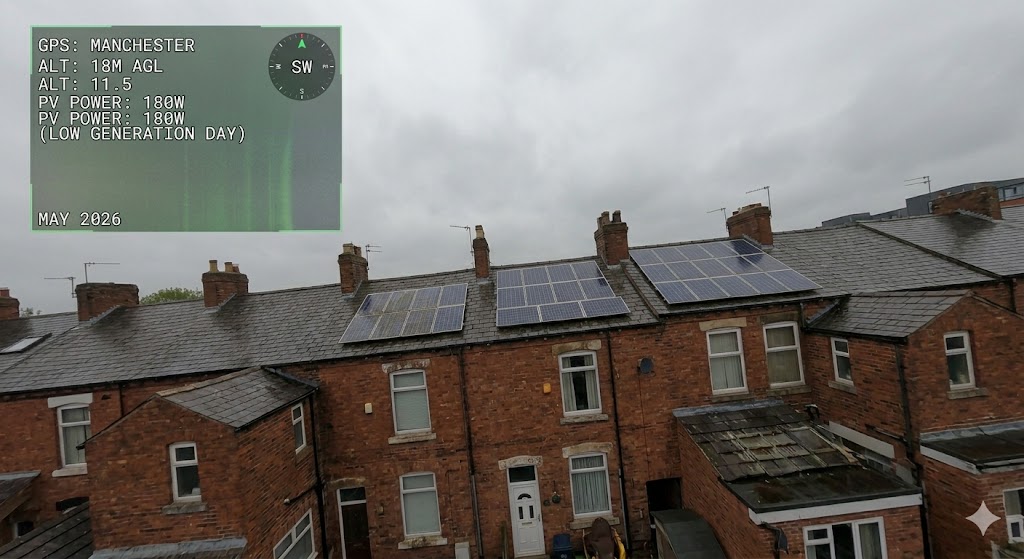
Self-consumption maximisation: Without a battery, a typical UK household with solar panels self-consumes only 30–40% of the electricity their panels generate, exporting the rest to the grid at low SEG rates (often 5–8p/kWh). Adding a 5 kWh battery raises self-consumption to around 70%, meaning you use your own free electricity instead of buying expensive grid power at 24–28p/kWh. For a system generating 3,400 kWh/year, this shift can add £200–£350 to your annual savings.
-
Tariff arbitrage: Smart electricity tariffs such as Octopus Go offer off-peak rates as low as 7–7.5p/kWh overnight. A home battery charges during these cheap hours and powers your home during expensive peak periods (typically 4pm–7pm at 25–28p/kWh). The difference multiplied across daily usage represents savings of £300–£600 per year even without solar panels.
Combined, these two effects are why approximately 94% of new solar installations in the UK now include a battery — up dramatically from just three years ago.
What Size Home Battery Do I Need in the UK?
The right battery size for most UK homes sits between 5 and 10 kWh. Bigger is not always better — an oversized battery sits partially empty most of the time, worsening your payback period without improving your savings.
The correct sizing approach: calculate your evening load — the electricity you typically use from sunset to bedtime. This is the demand your battery needs to cover. For a typical three-bedroom UK home, that is approximately 5–8 kWh per evening. A 10 kWh battery provides comfortable coverage with headroom for seasonal variation.
Consider your situation:
-
Smaller households or flats: A 5 kWh battery covers most evening demand and offers the fastest payback per pound invested.
-
3–4 bed family homes: A 10 kWh system provides full evening coverage and can also be charged from off-peak grid electricity overnight.
-
Homes with EVs: A 13 kWh+ system provides the greatest long-term return — cheap overnight electricity powers both the home and car. Home Battery Storage UK 2026
Pro Tip: In summer, a 5 kW solar system generates 20–30 kWh per day, far more than a 10 kWh battery can store. In winter, the same system may only generate 3–6 kWh. The sweet spot is a battery sized for winter storage demand, not summer surplus.
Best Home Battery Storage Brands in the UK 2026
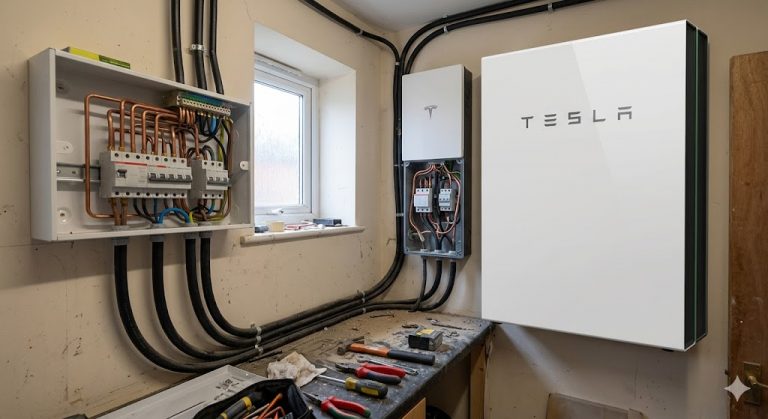
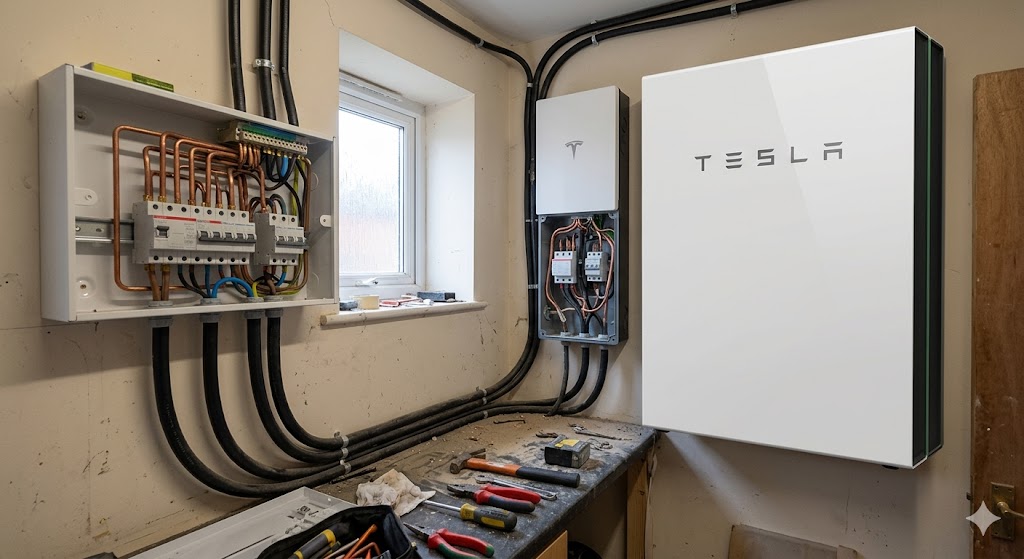
Tesla Powerwall 3
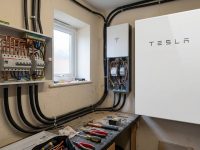
The Powerwall 3 integrates the inverter directly into the battery unit, simplifying installation and delivering market-leading 97.5% round-trip efficiency. It supports full home backup during grid outages and comes with a 10-year warranty.
-
Best for: Homeowners who want best-in-class efficiency and backup capability.
Fox ESS (EP Series)
Fox ESS has established a strong UK installer network and delivers solid round-trip efficiency of approximately 92%. The EP series has particularly strong integration with Octopus Intelligent tariffs.
-
Best for: Homeowners prioritising smart tariff integration at a competitive price point.
BYD Battery-Box
BYD offers modular battery systems that can be expanded in capacity as your needs grow. BYD’s LFP chemistry and manufacturing scale give it a competitive price advantage.
-
Best for: Homeowners who want a modular approach to capacity growth or who may add an EV in the future.
SolarEdge Home Battery
Well-suited for homes with an existing SolarEdge solar inverter, integrating deeply with the SolarEdge ecosystem for seamless monitoring and optimisation.
-
Best for: Retrofit installations on existing SolarEdge solar systems.
Note on GivEnergy: GivEnergy entered administration in early 2025. If you are considering a GivEnergy system, verify the current company status thoroughly before purchasing, as warranty servicing and software support may be affected.
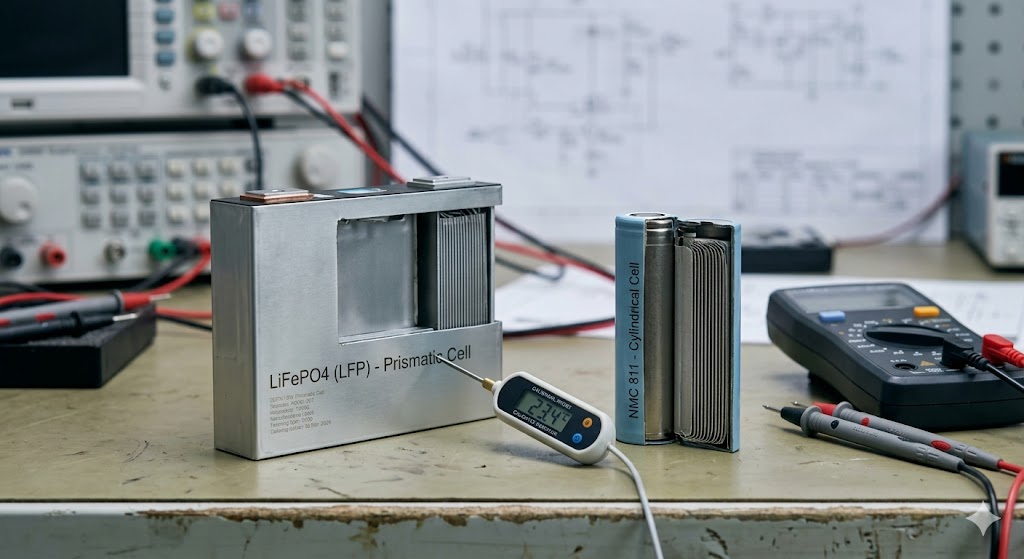
LFP vs NMC: Which Battery Chemistry Should You Choose?
In 2026, lithium iron phosphate (LFP or LiFePO4) is the clear standard for home battery storage in the UK. All leading brands now use LFP chemistry, and it is the right choice for the vast majority of homeowners.
LFP batteries typically last 6,000–10,000 charge cycles. At one cycle per day, that translates to 16–27 years of service. LFP is also thermally stable and significantly safer than older NMC (Nickel Manganese Cobalt) chemistry, which is prone to thermal runaway.
If any installer quotes you a system using NMC chemistry in 2026 without a compelling explanation, treat that as a red flag. LFP is the benchmark.
How to Maximise Your Home Battery Savings: Smart Tariff Guide
Switching to a time-of-use electricity tariff is one of the single biggest steps you can take to improve your return on investment.
-
Octopus Go: A guaranteed 7.5p/kWh for five hours overnight (23:30–05:30). Simplest and most predictable choice for battery owners. Payback on a 16 kWh battery is approximately 3.2–3.4 years using this tariff.
-
Intelligent Octopus Go: Takes Octopus Go further with smart scheduling. The platform automatically manages charging based on grid conditions, dropping the effective overnight rate to approximately 7p/kWh.
-
Octopus Flux / Agile Octopus: These tariffs offer the highest ceiling for savings but require active management. Agile pricing fluctuates based on wholesale electricity costs and can occasionally go negative.
Home Battery Storage vs Solar Panels: Which Should You Install First?
If you are starting from scratch with no solar panels, the recommendation in 2026 is consistent: install solar panels first. Solar panels alone have a faster standalone payback period than a battery.
A typical 4 kWp solar system pays back within 7–10 years. Batteries added at the same time as solar panels are significantly cheaper to install than retrofits, so combining both in one installation is usually the most cost-effective approach.
If you already have solar panels, retrofitting a battery remains financially justified. An AC-coupled battery such as the Tesla Powerwall 3 can retrofit to any existing inverter.
🔗 See our guide to the best air-source heat pumps for UK homes in 2025 to understand how a battery can also reduce your heat pump running costs.
How Long Does a Home Battery Last in the UK?
Modern LFP home batteries are rated for 6,000–10,000 charge cycles. At one cycle per day, this translates to a service life of 16–27 years. Most manufacturers offer 10-year warranties guaranteeing a minimum retained capacity of 70–80% of the original.
After 10 years, most quality LFP batteries still operate at above 80% capacity. There are no moving parts in a home battery system and no annual servicing requirements.
Do I Need Planning Permission for Home Battery Storage?
In most cases, no planning permission is required for a home battery storage system in the UK. Installing a battery indoors — in a garage, utility room, or cupboard — falls under permitted development rights.
Exceptions apply for listed buildings or properties in conservation areas. All battery systems over 3.68 kW output must be registered with your local Distribution Network Operator (DNO). A competent MCS-certified installer will handle this notification as part of the process.
Comparing Payback: Home Battery Storage Scenarios at a Glance
| Scenario | Annual Saving | Payback Period |
| Solar + EV + Octopus Go tariff | £700–£900/yr | 5–8 years |
| Solar + Octopus Go tariff | £500–£700/yr | 7–10 years |
| Solar + flat-rate tariff | £200–£400/yr | 12–15 years |
| Battery only + Octopus Go (no solar) | £300–£500/yr | 7–10 years |
| Battery only + flat-rate tariff | £100–£200/yr | 20+ years |
(These figures assume a 10 kWh battery at an installed cost of approximately £5,500. Always get at least three quotes from MCS-certified installers before committing.)
What to Do Before Buying a Home Battery in 2026: Checklist
Before you sign a contract, work through this pre-purchase checklist:
-
Check your eligibility for grants: Warm Homes Local Grant, ECO4, and government loans.
-
Switch to a time-of-use tariff first: It costs nothing and improves your ROI.
-
Size correctly: Calculate your evening electricity demand, not just your total daily usage.
-
Verify MCS certification: Ensures you are eligible for the SEG and government schemes.
-
Get three quotes: The cheapest quote is not always the best value.
-
Check DNO registration: Confirm your installer will handle the paperwork.
-
Review warranty terms: Aim for a minimum 10-year warranty.
🔗 If you are pairing a battery with a heat pump, see our complete UK heat pump guide 2025 for grants and installation advice.
FAQ: Home Battery Storage UK 2026
Q: Is home battery storage worth it in the UK in 2026?
For households with solar panels and a time-of-use tariff like Octopus Go, it is worth it. Payback periods of 5–10 years are realistic, and savings of £400–£900 per year are achievable.
Q: How much does home battery storage cost in the UK?
A fully installed home battery costs between £2,500 and £8,000 in 2026. A 10 kWh system — suitable for a 3–4 bed home — typically costs £4,500–£7,000 installed.
Q: Can I get a grant for home battery storage in the UK?
There is no standalone grant for electrical battery storage, but schemes like the Warm Homes Local Grant and ECO4 can cover installations for eligible low-income households.
Q: Do I need solar panels to benefit from a home battery?
No. A home battery without solar can save £300–£500 per year on a time-of-use tariff by charging cheaply overnight and discharging during peak hours. However, combining it with solar is significantly more profitable.
Q: How long does a home battery last?
Modern LFP home batteries last 16–27 years at one cycle per day.
Q: What is the best home battery brand in the UK?
Tesla Powerwall 3 offers the highest efficiency. Fox ESS EP series delivers excellent smart tariff integration. BYD Battery-Box is a strong modular option.
Q: Do I need planning permission for a home battery?
In most cases, no. Indoor battery installations fall under permitted development for the vast majority of UK homes.
Q: Is 0% VAT available on home battery storage?
Yes. Since February 2024, 0% VAT applies to all home battery storage installations in the UK. The zero-rate is scheduled until 31 March 2027.
Final Verdict: Is Home Battery Storage Right for Your Home?
Home battery storage has crossed a genuine financial threshold in 2026. Battery prices are lower, government incentives are wider, and smart tariffs have transformed the economics for millions of UK households. The technology is mature, the warranties are long, and the savings are material enough to make a real difference to annual bills.
If you have solar panels and are willing to switch to a time-of-use tariff, a home battery is almost certainly a sound investment in 2026. The April 2026 energy reforms have made the long-term direction of UK energy policy clearer than ever. Households that invest in solar, storage, and smart tariffs now will be best positioned as electricity prices evolve.
🔗 Read our hybrid heating systems guide to explore how battery storage, solar panels, and heat pumps can work together as a complete home energy system.
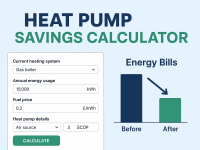
🔗 Use our heat pump savings calculator to model how a battery could reduce your heat pump running costs.
About the Author
The Xyra Editorial Team specialises in practical guidance on green home technology for UK homeowners. Our writers hold backgrounds in renewable energy, building physics, and consumer energy policy, and we verify all cost figures and grant details against current Ofgem, GOV.UK, and MCS guidance. We update our articles quarterly to reflect changes in tariffs, grants, and technology.
Sources: Ofgem BUS guidance (April 2026), GOV.UK Warm Homes Plan, MCS installer certification data, Look Into (April 2026), Solar Panels Network (April 2026), Habo Energy (April 2026), Kilowatts.uk (May 2026), Solar Energy Concepts (2026).


0 Comments